Capabilities: Through wood, sand, and fire,a casting becomes a part.
Every casting begins as a drawing, then becomes a wooden pattern, a sand mold, molten metal, and a rough as-cast piece before the lathe turns it into a part. This page follows the twelve steps from design to delivery, then covers our casting ranges, equipment, quality checks, and how our group shares the work.
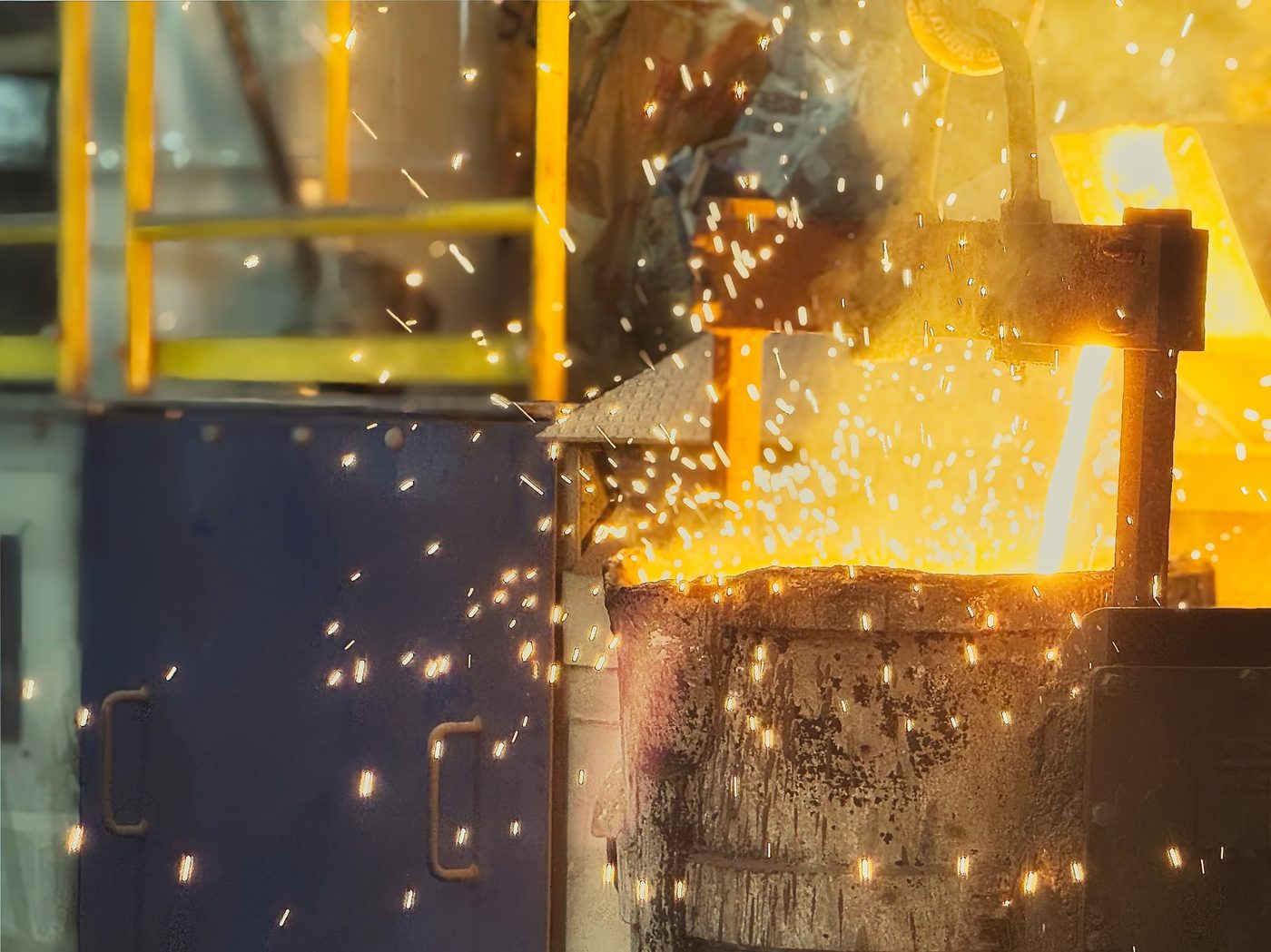
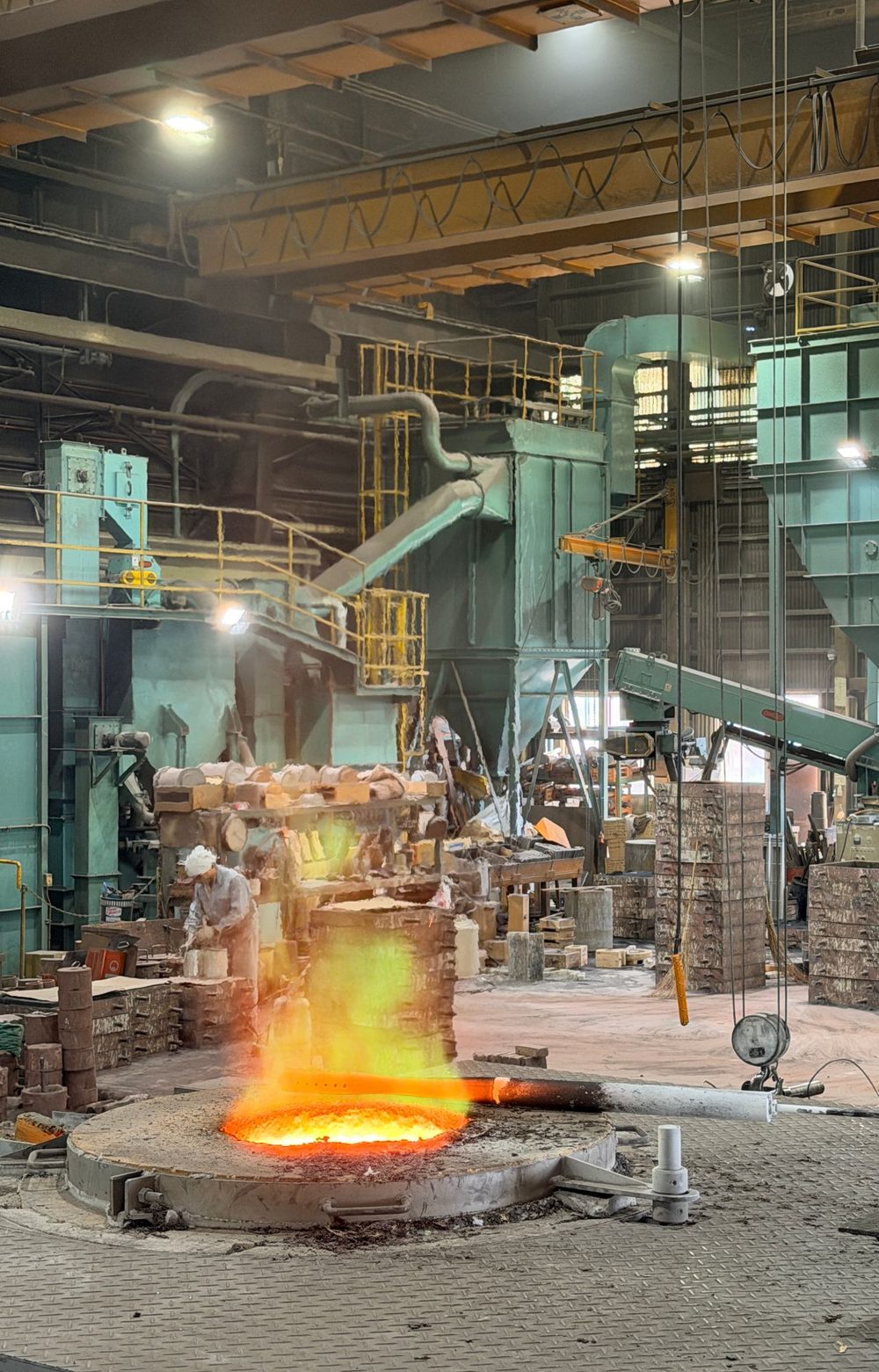
From furnace to ladle, on the Ueda Metal Works casting floor.
We work out the shape from your drawing, make the pattern, and build the sand mold. We melt the metal in our furnaces, check its chemistry, then pour it. We shake out the sand and machine the casting on our lathes, and parts that need finer finishing go to Hayahoshi Seiko, our group company. After a pre-shipment inspection, every order is delivered in the condition you need. As you read, Fig. 1 changes from a drawing to a machined part.
Fig. 1How a casting is madeNowDrawing
Casting design
Sprue and riser layout
Melting
Induction and gas furnaces
Chemical analysis
Melt, before pouring
Spectrometer
PDA-7000
Precision turning, Hayahoshi Seiko
OD φ5–600 mm
Part (schematic)
Flanged bushing
Dimensions
φ580 × 600
Minimum order
1 piece, as a rule
Step 1 of 12DesignNowDrawing
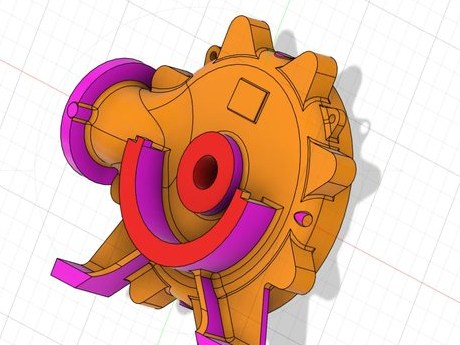
Fig. 1 3D model of a flanged bushing, based on the outer diameter and length of our CAC406 example (φ580 × 600). The flange and bore are for illustration.Fig. 1 Machining a copper-alloy flanged bushing.Unit: mm
Fig. 1 3D model of a flanged bushing, based on the outer diameter and length of our CAC406 example (φ580 × 600; unit: mm). The flange and bore are for illustration.Fig. 1 Machining a copper-alloy flanged bushing.
Step 1Design1 / 12
Step 1, Design: It all starts with a single drawing.
From your drawing, we model the casting in 3D CAD. We cut the wooden pattern and work out the casting design (gating and risering) from this 3D model.
Drawings
A single drawing is enough to start
3D model
Built in 3D CAD (used for the pattern and the casting design)
Step 2Pattern Making2 / 12
Step 2, Pattern Making: The master shape for the mold, made in wood.
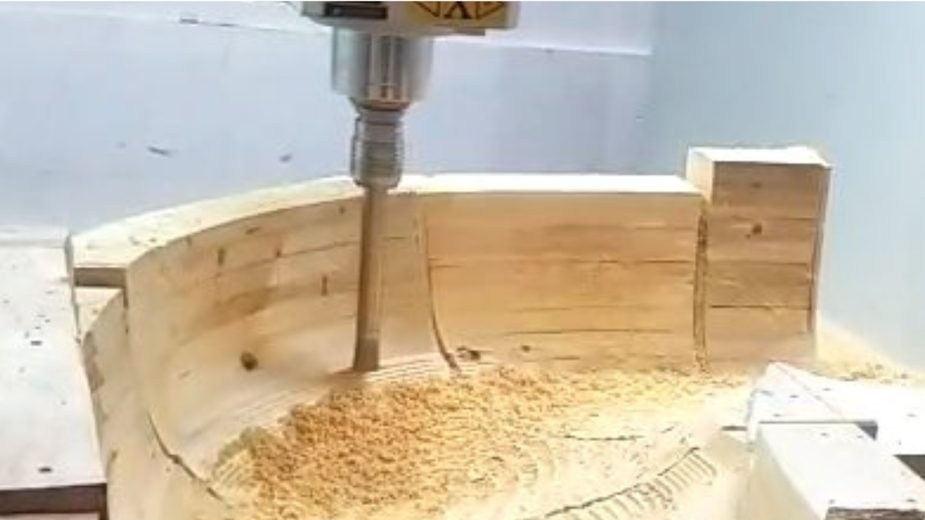
From the drawing and the 3D model, we make the wooden pattern in-house. It is the master shape that the sand mold is formed around.
Wooden patterns
Made in-house
Cutting a wooden pattern.
Step 3Casting Design3 / 12
Step 3, Casting Design and Casting Simulation: We read the flow before we pour.
Where should the sprue and risers go? Before we settle the casting design, casting simulation shows how the molten metal will fill the mold and solidify.
Casting simulation system
Mold-filling and solidification analysis, etc. (1 set)
A 3D model used in casting design.
Step 4Molding4 / 12
Step 4, Molding: Sand packed around the pattern becomes the mold.
The wooden pattern is packed in sand from our no-bake(self-hardening) sand mixer, and the sand sets into a mold. When the pattern is drawn out, the cavity it leaves takes the shape of the casting.
No-bake sand mixer
10 t/h (alkaline phenolic process)
Filling a flask with sand from the no-bake mixer.
Step 5Melting5 / 12
Step 5, Melting: The metal is melted in our furnaces.
We melt the metal in our induction and gas furnaces. In December 2025, we replaced all of our heavy-oil furnaces with gas furnaces.
High-frequency induction furnaces
1,000 kg (2 units),500 kg (1 unit)
Gas furnaces
850 kg (2 units),350 kg (1 unit),150 kg (1 unit)
Step 6Inspection and Analysis6 / 12
Step 6, Inspection and Analysis: We check the chemistry with light.
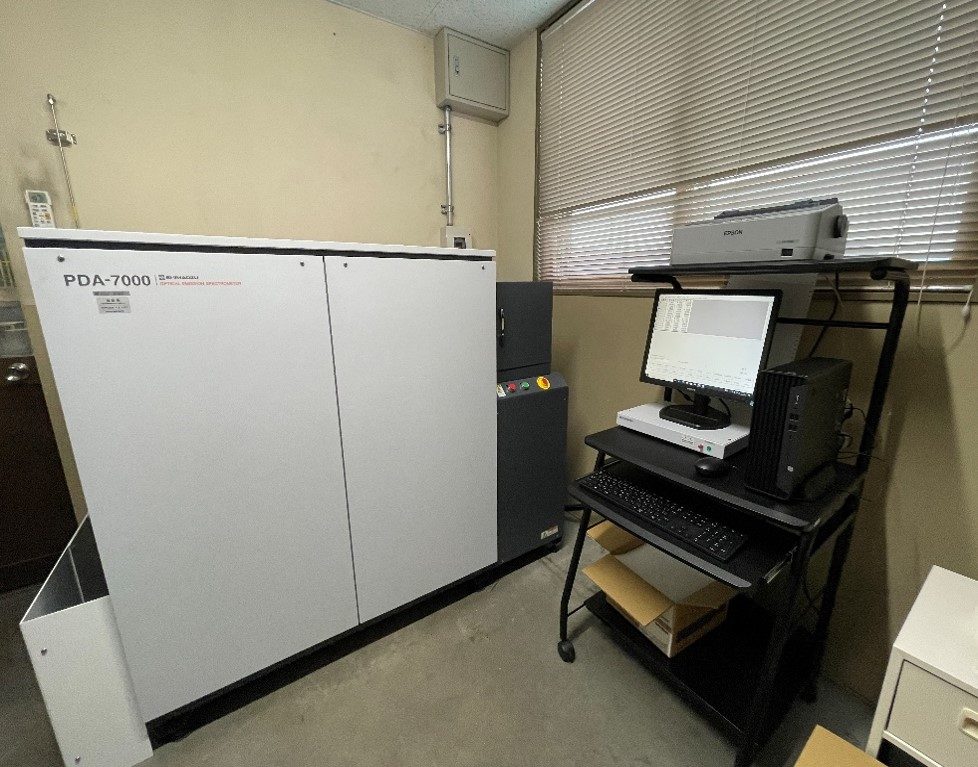
Before pouring, we check the chemical composition of the molten metal with an optical emission spectrometer. On request, we provide a material certificate.
Optical emission spectrometer
Shimadzu PDA-7000 (1 unit, introduced April 2023)
Material certificates
Available on request
Optical emission spectrometer, Shimadzu PDA-7000.
Step 7Pouring7 / 12
Step 7, Pouring: From the ladle into the sand mold.
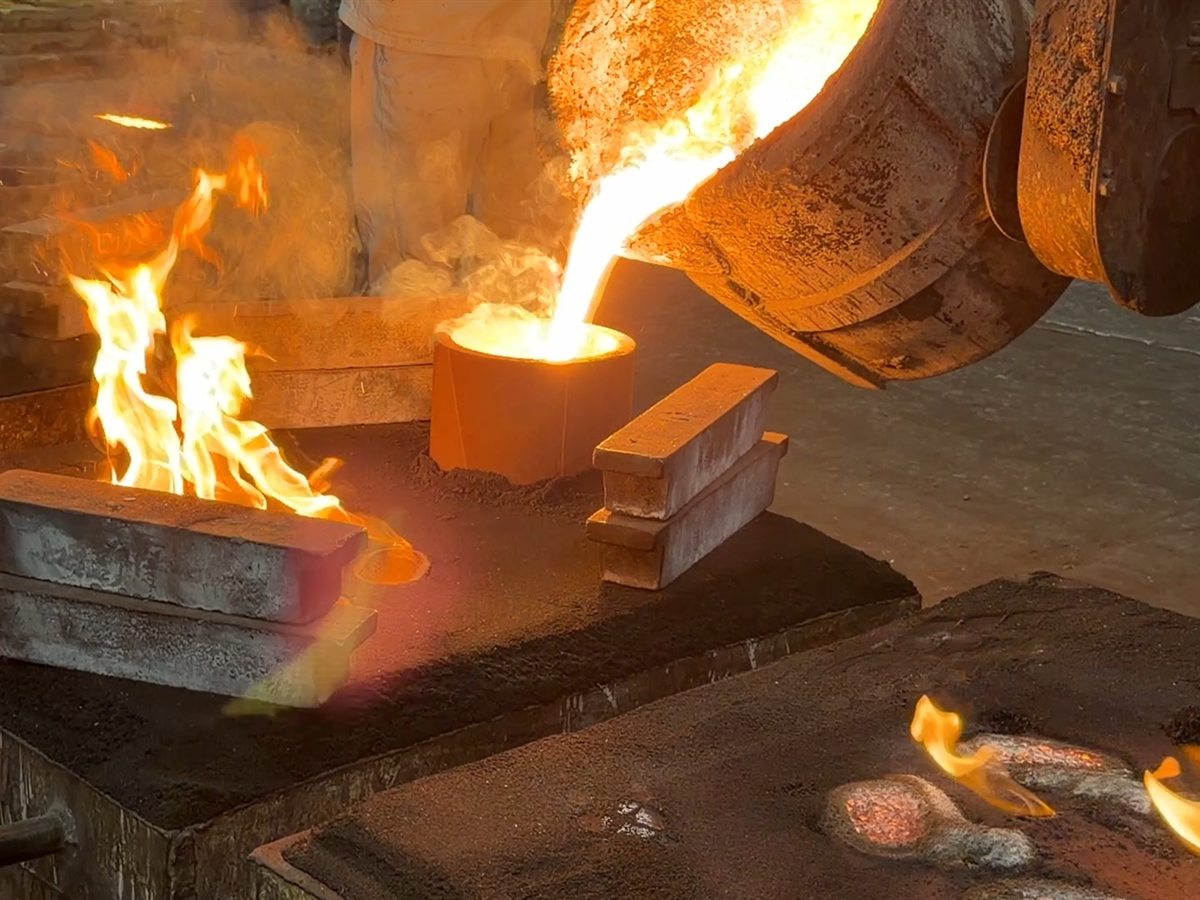
The molten metal is taken up in a ladle and poured into the sand mold by hand. Copper alloys and special alloys can also be centrifugally cast.
Sand casting
approx. 5 kg to 2 t; max. Φ2,000 × 2,000 L(max. casting weight 2,000 kg)
Centrifugal casting machines
2 units; Φ120–Φ800, length 350–1,150 mm(copper alloys and special alloys)
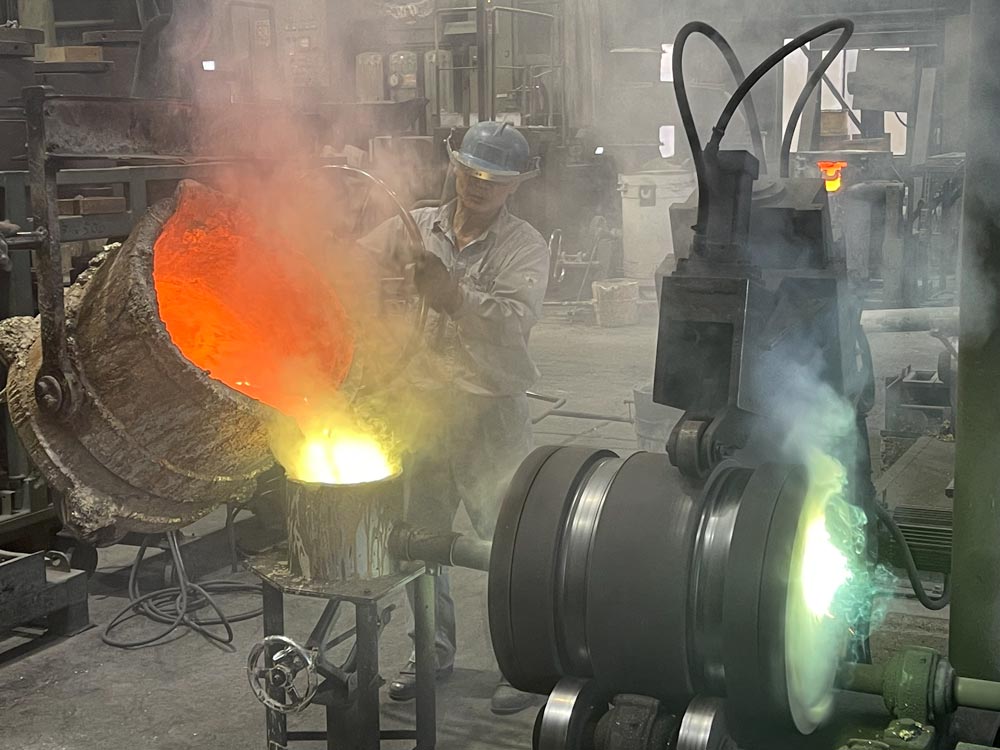
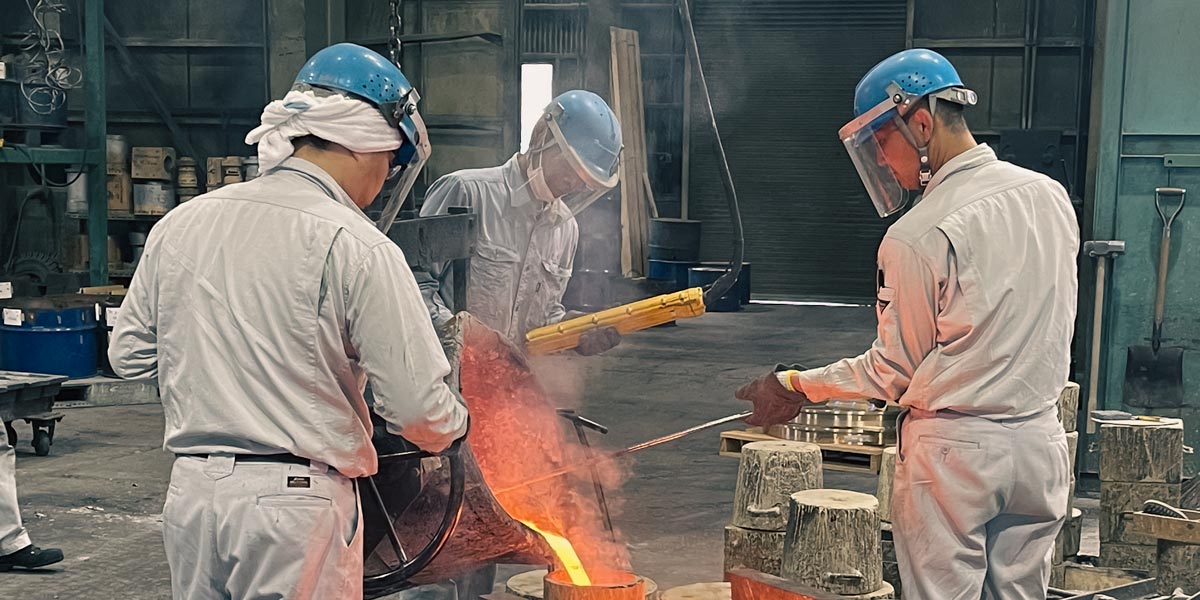
Pouring from the ladle into the sprue of a sand mold.
Step 8Shakeout and Finishing8 / 12
Step 8, Shakeout, Finishing, and Weld Repair: Out of the sand comes the casting.
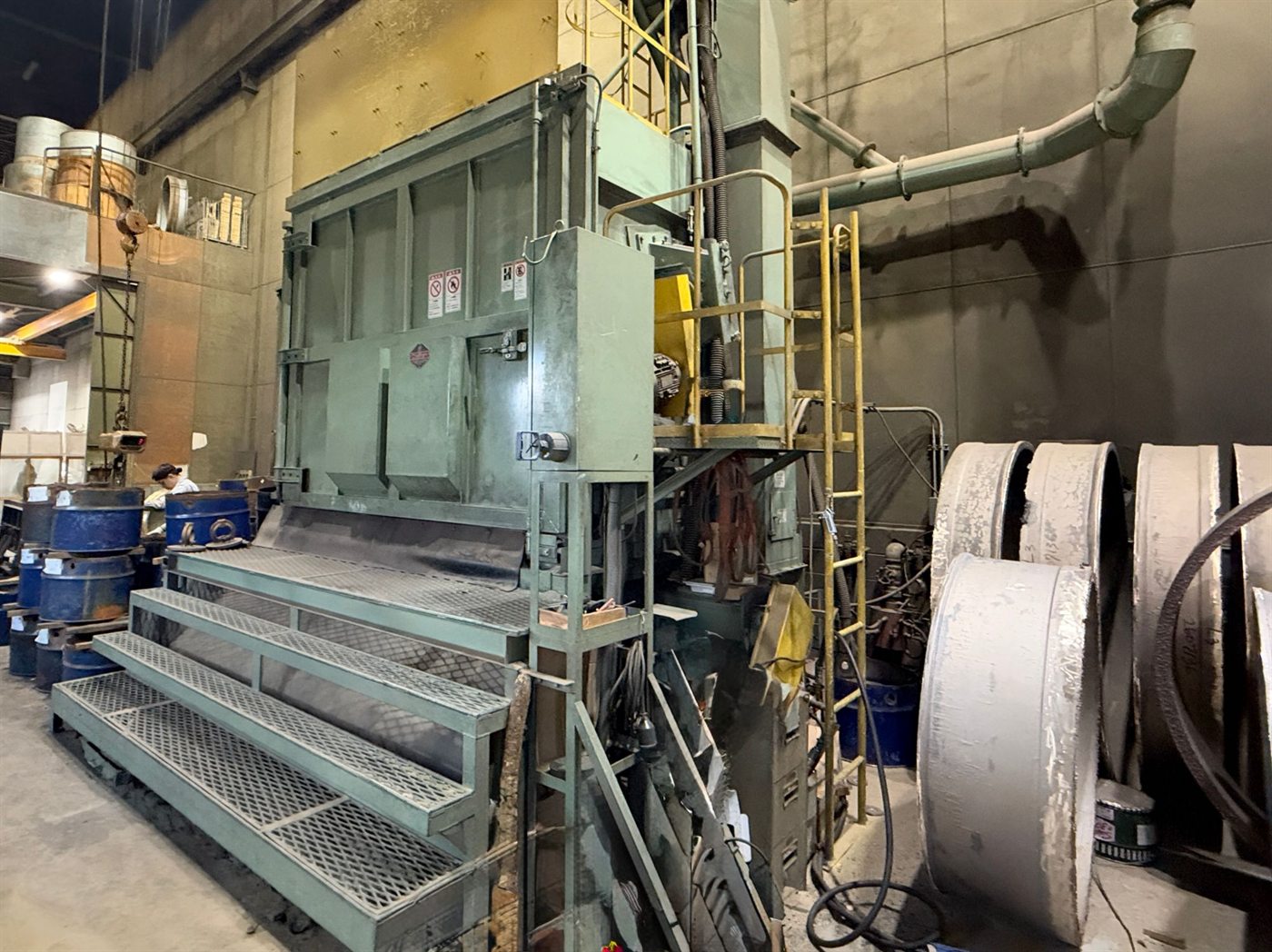
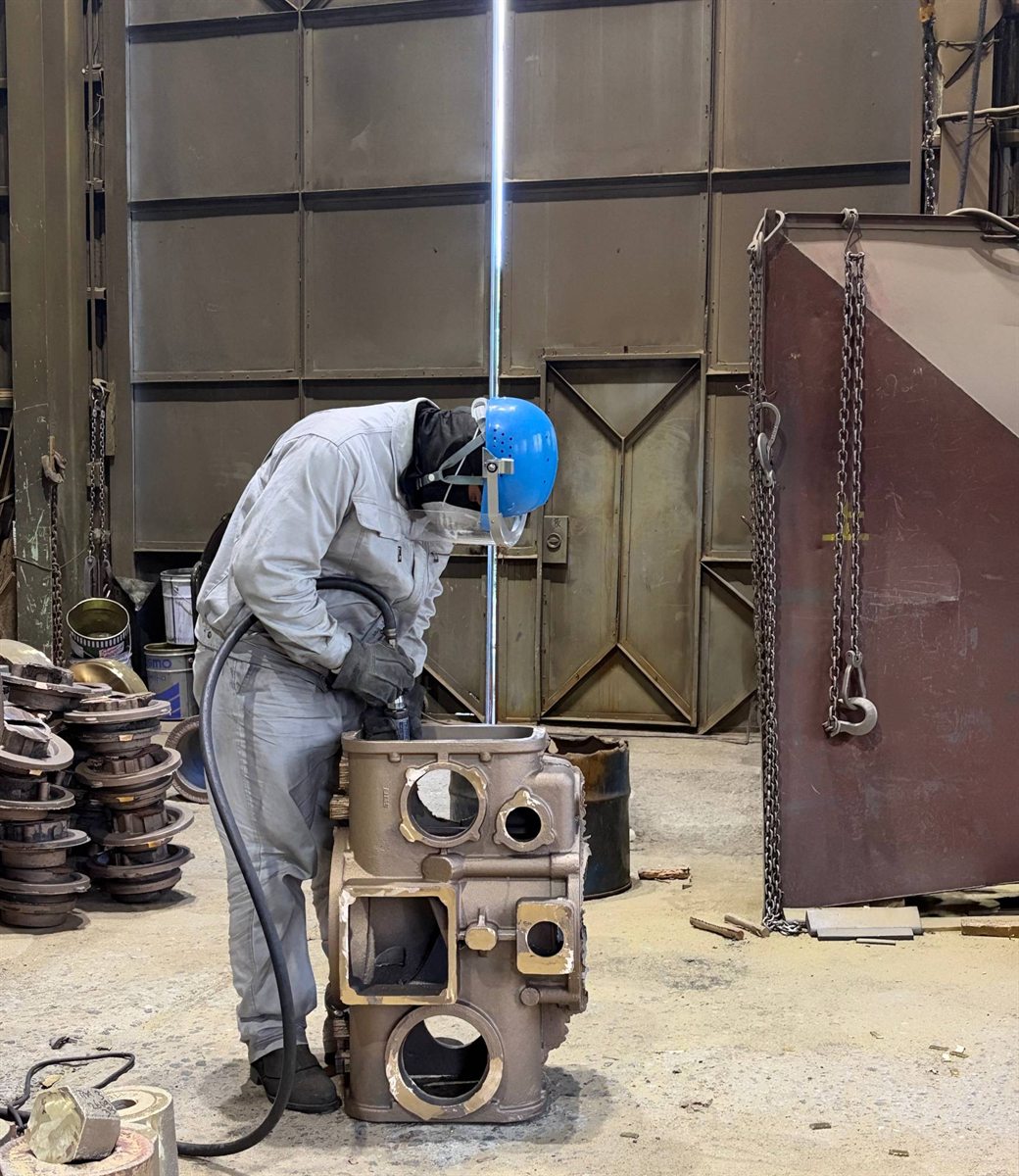
Once the metal has solidified, we take the casting out of the mold and shot-blast off the sand. Fettling removes the sprue, risers, and fins, and we make weld repairs where needed. Large castings are lifted by cranes of up to 5 t.
5 t (1 unit),3 t (2 units),2.8 t (3 units),1 t (1 unit)
Crusher and sand cooler
1 set
Shot blasting machine.
Fettling: shaping the casting with a grinder.
Step 9Machining9 / 12
Step 9, Machining: The lathe turns cast skin into a finished surface.
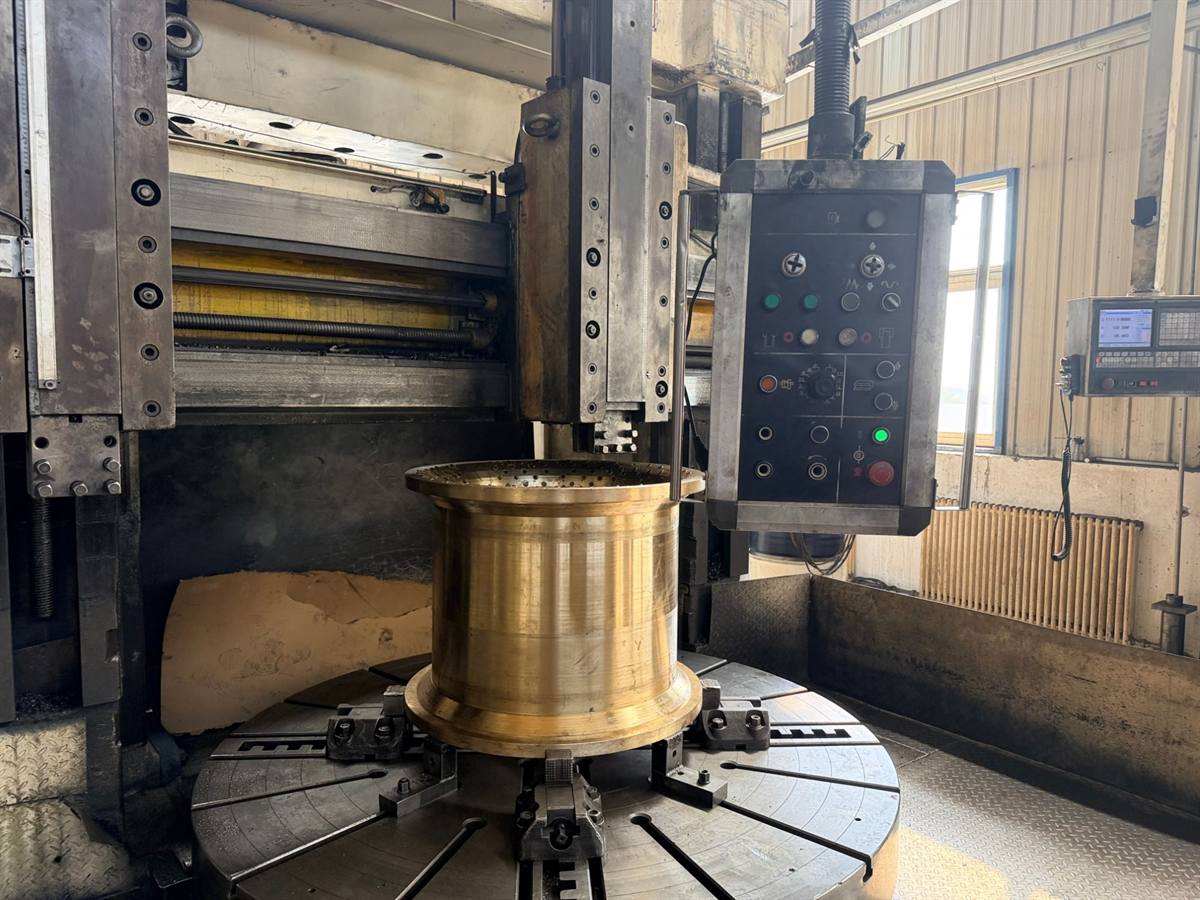
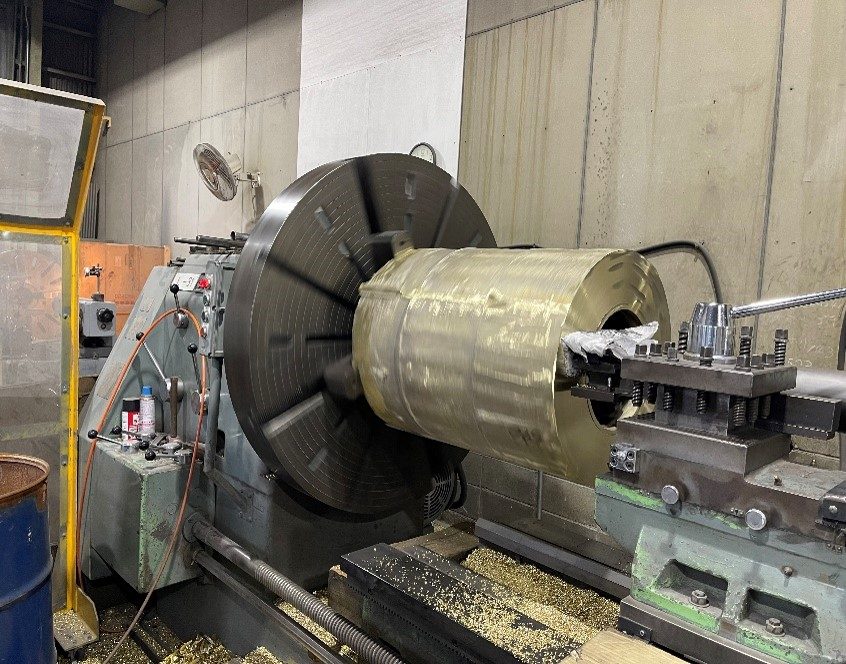
We machine castings on manual lathes and milling machines. You can have them delivered rough-machined, with a machining allowance left on, or finish-machined to your drawing.
Manual lathes
11 units (max. Φ1,850)
Milling machines
2 units (NC and manual)
Turning a copper-alloy casting on a lathe.
Step 10Precision Machining10 / 12
Step 10, Precision Machining (Hayahoshi Seiko, our group company): For finer finishing, the casting goes to Fuchu.
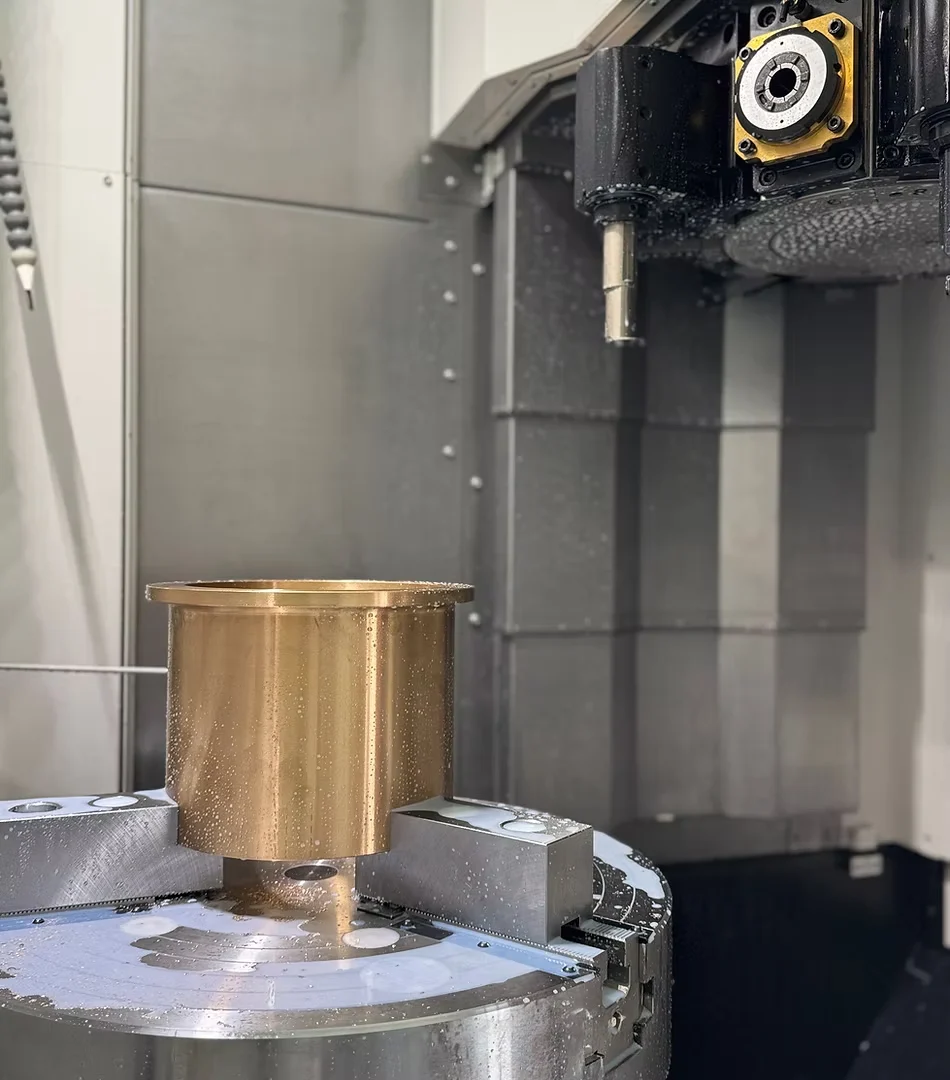
Precision turning (OD φ5–600 mm) and high-volume machining are handled by Hayahoshi Seiko, our group company in Fuchu, Toyama City. Founded in 1963, it takes on everything from single prototypes to volume production on the scale of 600,000 pieces a month. We propose how to divide the machining once we have discussed your part.
Hayahoshi Seiko Co., Ltd.
Fuchu, Toyama City, Toyama
Precision turning
OD φ5–600 mm
Quantities
From a single prototype to volume production on the scale of 600,000 pieces a month
Quality
ISO 9001:2015 certified (Hayahoshi Seiko)
Fig. Machining ranges by outer diameter (log scale). For Ueda Metal Works, only the maximum diameter is shown.
Precision machining of a copper-alloy flanged bushing.
Step 11Pre-shipment Inspection11 / 12
Step 11, Pre-shipment Inspection: One more check before it ships.
We inspect finished castings and parts before they are shipped. Material certificates are available on request.
Inspection
In-house, before shipping
Material certificates
Available on request
Step 12Delivery12 / 12
Step 12, Delivery: However many hands, one point of contact.
We deliver in the condition you need: rough-machined, finish-machined, or precision-machined in the group. Sizes and quantities beyond our range are sourced by our parent company, Co Creation. From your first inquiry to delivery, Ueda Metal Works is your point of contact.
Part II, Methods and Ranges: Cast in sand, or cast in a spinning mold.
We use two casting methods: sand casting, in which the mold is made from a pattern and sand, and centrifugal casting, in which molten metal is poured into a rotating metal mold. We propose the method that suits your part’s shape, size, and material.
What the video shows: from a ladle at the upper right, a stream of molten metal runs into the sprue of a sand mold. Flames rise from the top of the mold, and steam drifts up.
Pouring into a sand mold, from the ladle into the sprue.
Method 1
Sand casting
The wooden pattern is packed in sand from the no-bake mixer, and the sand sets into a mold. Molten metal is then poured into the cavity. We sand-cast copper alloys, stainless steel, cast iron, and cast steel, from small pieces of approx. 5 kg to large castings of approx. 2 t.
Molten metal is poured into a cylindrical metal mold while it spins. Centrifugal force presses the metal against the mold wall, giving a tubular casting with a dense, uniform structure. We cast copper alloys and special alloys this way.
Dimensions
Φ120–Φ800; length 350–1,150 mm
Materials
Copper alloys, special alloys
Centrifugal casting machines
2 units
Maximum sizes and weights: Castings up to 2 m across and 2 t.
In sand casting, we make castings of up to Φ2,000 × 2,000 L, with a maximum casting weight of 2,000 kg. Centrifugal castings run from Φ120 to Φ800 in diameter and from 350 to 1,150 mm in length. We machine castings in-house up to Φ1,850.
Max. sand castingΦ2,000×2,000LMax. casting weight 2,000 kg
2,000
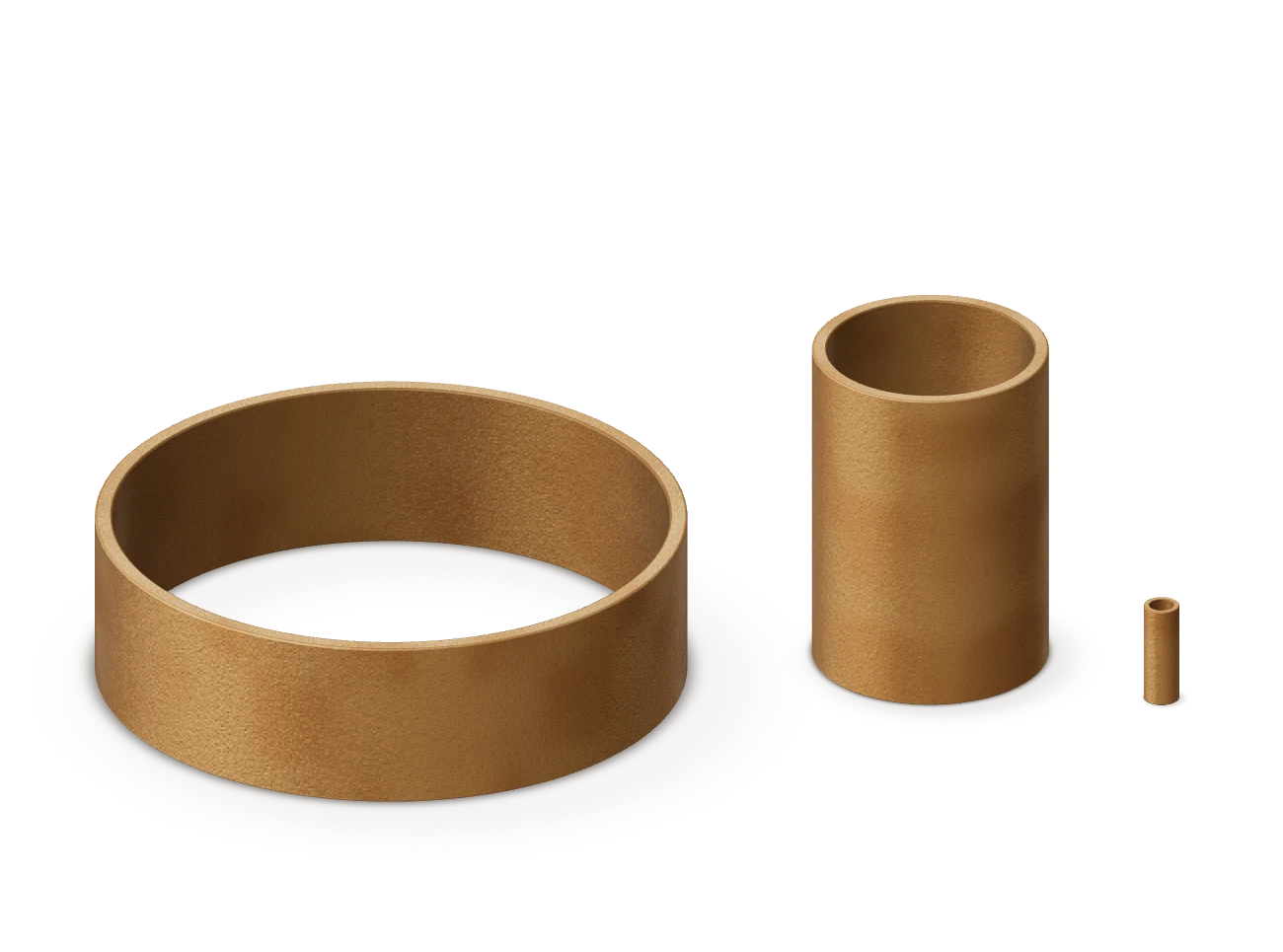
Φ2,000e.g.As-cast ring
Centrifugal castingΦ120–Φ800Length 350–1,150 mm
Φ800Max.
1,150
Φ120
Min.
350
05001,000 mm
Max. sand castingΦ2,000×2,000LMax. casting weight 2,000 kg
2,000
Φ2,000e.g.As-cast ring
Centrifugal castingΦ120–Φ800Length 350–1,150 mm
Φ800Max.
1,150
Φ120
Min.
350
05001,000 mm
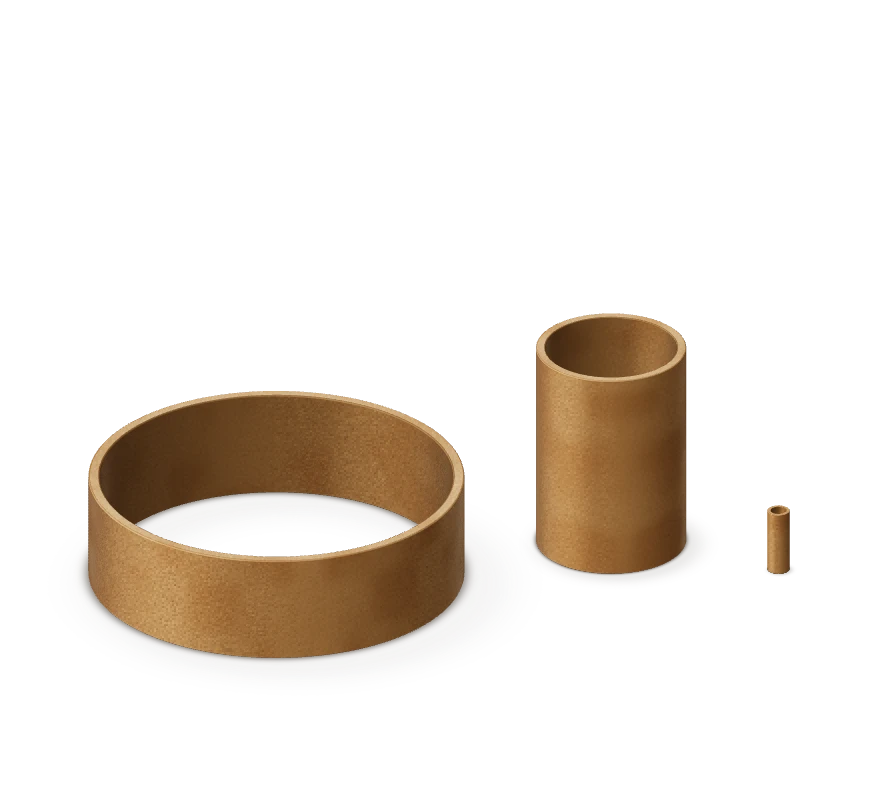
Fig. 2 Schematic drawn to the same scale. The dashed outline is the maximum size for sand casting; the ring inside is an example at the maximum diameter, as cast. The two tubes are the largest and smallest centrifugal castings. Shapes are illustrative and differ from actual products.
Maximum sizes and weights
Sand casting
approx. 5 kg to approx. 2 tmax. Φ2,000 × 2,000 L
Centrifugal casting
Φ120–Φ800; length 350–1,150 mm
Max. casting weight
2,000 kg
Machining
max. Φ1,850
Minimum order
1 piece, as a rule (depending on the material)
Note: casting and machining figures are for Ueda Metal Works’ in-house equipment.
Part III, Equipment and Factories: From the furnace to the spectrometer.
Furnaces to melt the metal, a mixer for the sand, cranes to lift large castings, lathes to machine them, and a spectrometer to check the chemistry: these are the main machines behind our castings.
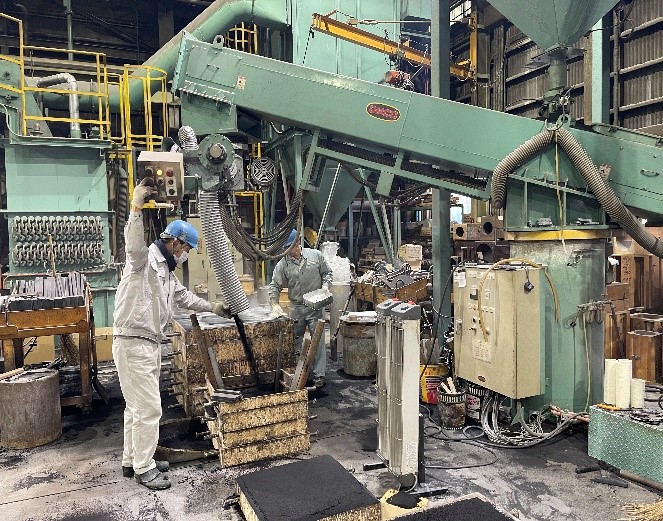
From ladle to mold, three people in face shields.
Equipment list
Equipment
Specification
High-frequency induction furnaces
1,000 kg (2 units),500 kg (1 unit)The 500 kg furnace was installed in July 2023.
Gas furnaces
850 kg (2 units),350 kg (1 unit),150 kg (1 unit)Replaced the heavy-oil furnaces in December 2025.
Centrifugal casting machines
2 units
No-bake sand mixer
10 t/h (alkaline phenolic process)
Crusher and sand cooler
1 set
Shot blasting machines(swing-table type)
max. Φ2,000 (1 unit),Φ800 (1 unit)
Cranes
5 t (1 unit),3 t (2 units),2.8 t (3 units),1 t (1 unit)
Manual lathes
11 units (max. Φ1,850)
Milling machines
2 units (NC and manual)
Optical emission spectrometer
Shimadzu PDA-7000 (1 unit)Introduced in April 2023.
Casting simulation system
Mold-filling and solidification analysis, etc. (1 set)
Three factories: We cast at the Head Office and machine at all three factories.
The Head Office (First Factory) handles everything from casting to machining. The Second Factory joined in 2024 and handles finishing and machining; the Third Factory joined in 2025 and handles machining. All three stand along Prefectural Road 235 in Ishimaru, Takaoka.
Head Office(First Factory)3,867.79 m²
Second Factoryapprox. 750 m²
Third Factoryapprox. 1,200 m²
0204060 m
Fig. 3 Each site drawn as a square of the same area, to one scale. The squares do not show the actual shape of the sites. Dashed lines: estimates. One division = 10 m.
The three factories: main processes and areas
Factory
Main processes
Site area
Building area
Head Office(First Factory)
Casting, finishing, machining
3,867.79 m²
Factory 1F 1,262.55 m²Factory 2F 1,262.55 m²Administration building 194.94 m²Machine room 40.30 m²
Second Factory
Finishing, machining
approx. 750 m²
approx. 190 m²(main building)
Third Factory
Machining
approx. 1,200 m²
approx. 210 m²(main building)
Note: areas for the Second and Third Factories are estimates; building areas are for the main building.
Part IV, Quality Assurance: What we check, and what we certify.
Before pouring, casting simulation shows how the metal will fill the mold and solidify, and we set the gating and risering from the results. We also check the chemical composition of the molten metal with an optical emission spectrometer. After pouring, we inspect the castings before shipment. On request, we issue a material certificate (mill sheet).
Before and after pouringFig. 4
Before pouring
Plan the gating and risering with mold-filling and solidification analysis
Check the chemical composition of the molten metal on a Shimadzu PDA-7000
Pouring
After pouring
Inspect the castings before shipment
Provide a material certificate (on request)
What we do before and after pouring.
Quality and environmental management
Material certificates
Available on request
Chemical analysis
Optical emission spectrometer, Shimadzu PDA-7000
Inspection and repair
Inspection, fettling, and weld repair of castings, in-house
Environmental management
KES Environmental Management SystemRegistration No. KES1-21-0006
Group company
Hayahoshi Seiko Co., Ltd. is ISO 9001:2015 certified.
Part V, Four Strengths: Four reasons to work with us.
An integrated process, two main material lines, and checks before and after casting, each backed by the steps, ranges, and equipment on this page. The fourth, the strength of our group, follows in Part VI.
Strength 1
One drawing, from pattern to machining.
Design and pattern making, casting design, casting, finishing and weld repair, machining, and pre-shipment inspection are all done in-house. You do not need separate suppliers for the casting and the machining.
Copper alloys and stainless steel first, four material groups from one supplier.
Our main lines are copper-alloy and stainless steel castings. We also cast iron and steel, so you do not have to find a different foundry for each material. Materials not listed: please ask.
Before pouring, casting simulation shows how the metal will flow and solidify, and an optical emission spectrometer confirms the composition of the molten metal. After pouring, we inspect the castings before shipment and can provide a material certificate.
Part VI, Hand-off in the Group. Strength 4: Precision machining and larger items, through the group.
Precision turning (OD φ5–600 mm) and volume production are handled by Hayahoshi Seiko, our group company in Fuchu, Toyama City. Hayahoshi Seiko is ISO 9001:2015 certified.
Sizes and quantities that Ueda Metal Works cannot cast are sourced by our parent company, Co Creation, through its network in Japan and overseas. Co Creation’s sourcing track record: approx. 7 t in cast iron, approx. 3.5 t in stainless steel.
However many hands a casting passes through, you have a single point of contact: Ueda Metal Works.
Ishimaru, TakaokaUeda Metal Works Co Creation
Fuchu, Toyama CityHayahoshi Seiko
Fig. Ishimaru, Takaoka, and Fuchu, Toyama City (simplified map). Castings that need precision finishing travel from Takaoka to Fuchu to become parts.
The three companies of the group and their roles
Founded
Company
Location
Role
1929Founded
Ueda Metal Works Co., Ltd.
Ishimaru, Takaoka, Toyama
Patterns, casting design, casting, finishing, inspection, and machining (max. Φ1,850). Your point of contact.
1963Founded
Hayahoshi Seiko Co., Ltd.
Fuchu, Toyama City, Toyama
Precision turning, OD φ5–600 mm, from single prototypes to volume production on the scale of 600,000 pieces a month. ISO 9001:2015 certified.
2018Established
Co Creation Co., Ltd. (parent company)
Ishimaru, Takaoka, Toyama
Sourcing of large and high-volume items beyond Ueda Metal Works’ range (sourcing track record: approx. 7 t in cast iron, approx. 3.5 t in stainless steel).
Contact us by phone or through the form. We propose the casting method and how the machining will be divided, then make the part through our own process.
1InquiryBy phone or through the form, even with a single drawing.
2Quotation and Proposed MethodWe propose a method, such as sand or centrifugal casting, and how the machining will be divided.
3ProductionMade through our own process, from design to machining.
4InspectionWe inspect before shipping and, on request, provide a material certificate.
5DeliveryDelivered in the condition you need, such as rough-machined or finish-machined.
A single drawing is enough to start.
If it is a casting, please contact us. Knowing the material, dimensions, weight, and quantity helps us prepare a quotation quickly. After we receive your inquiry, we will let you know how to send drawings.
Four things that help us quote: material, dimensions, weight, quantity